
The Story of CMI Blog
Stories, in all their forms, were very important in the ages before lighting-fast communication and the internet. Songs, stories, paintings and poems were not funded by the Kings and Counts and Barons just because it was the noble thing to do. They were funded because these things provided legitimacy to their rule. A kingdom without […]
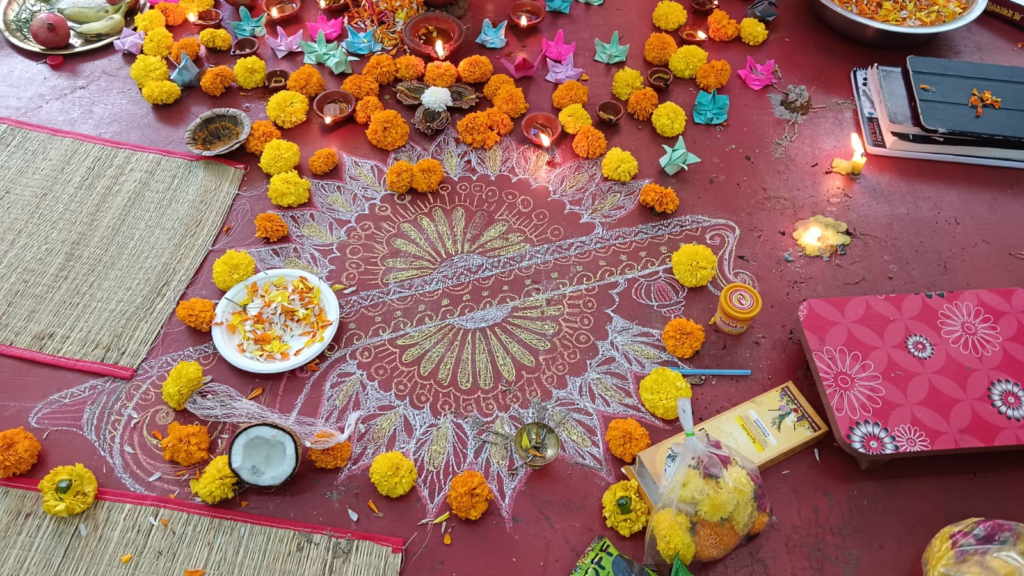
Stories, in all their forms, were very important in the ages before lighting-fast communication and the internet.
Songs, stories, paintings and poems were not funded by the Kings and Counts and Barons just because it was the noble thing to do. They were funded because these things provided legitimacy to their rule.
A kingdom without verses celebrating its triumphs, stories talking about its technologies and paintings illustrating its grandeur was a kingdom that existed only within its borders. There were no star ratings for the spices from India, just the accounts of travellers who could smell the food from miles away as well as the stories that the king had a courtier who visited the docks every morning and checked if the spices were the cream of the crop.
It was also important from the perspective of security. If every ballad claimed a single battalion fought with the force of a thousand elephants, rival kings had to wonder: what if it were true?
One of my favourite books is “The Gospel of Loki” by Joanne M. Harris. It is a re-telling of Norse Mythology from Loki’s perspective. It’s very entertaining, endlessly quotable and makes you feel like Loki is a friend you have known forever and happened to run into at a cafe and now, over coffee is sharing his dastardly plans and not the literal God of Lies scheming to plunge all that is known into eternal darkness. Also, the cover is simply gorgeous!
There is a common theme that Odin adopted Loki and was somewhat afraid of him because they were so similar. Contrary to popular belief, Odin’s main domain was never war… it was stories.
After all, words are what remain when all the deeds have been done. Words can shatter faith; start a war; change the course of history. A story can make your heart beat faster; topple walls; scale mountains – hey, a story can even raise the dead. And that’s why the King of Stories ended up being the King of the gods; because writing history and making history are only the breadth of a page apart.
Hello peeps, I am Arjun Agarwal. This is what I wanted my proposal for the CMI Student Blogs to be. I say ‘wanted’ cause the actual proposal was much more utilitarian and bare bones and nowhere close to this dramatic.
But that’s the point of writing. I wanted you to read this far and I hope the opening was entertaining enough to achieve that. When Rhyin, Harshitha and I were proposing the blog, however, we were trying to convince the faculty that a student blog was worth their trust, time and toil.
But that doesn’t mean it was not genuine.
From our initial mail:
(The blog would) allow prospective students, as well as peers from other colleges, to get a candid look into campus life, while also giving CMI students a platform to share their writing, art and opinions.
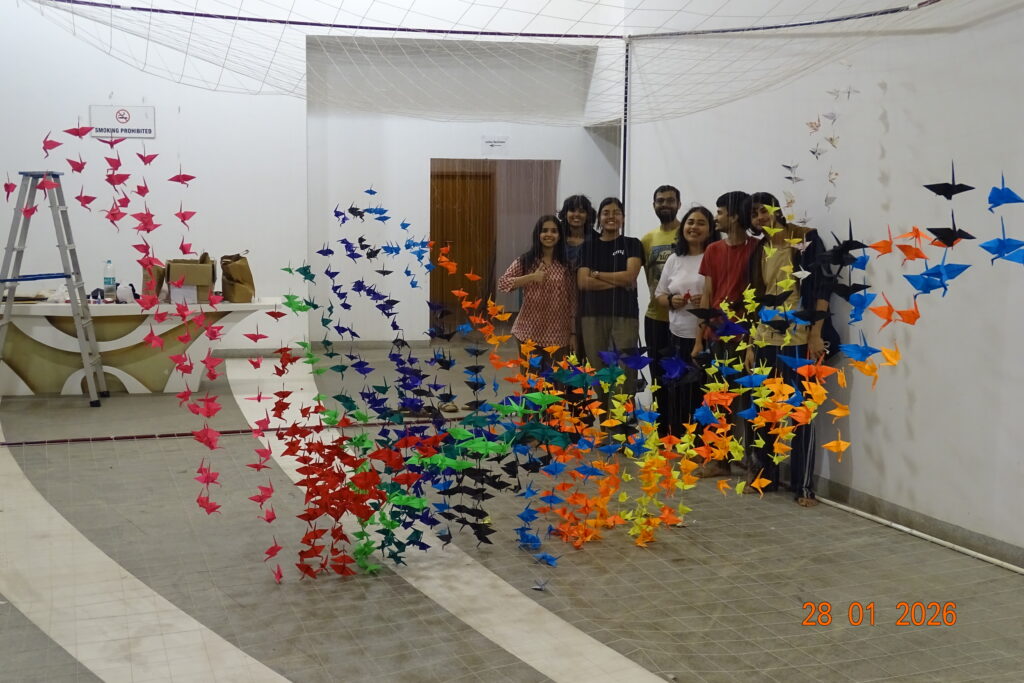
I believe that before you join or judge CMI you should know about the time we made a 1,000 paper cranes and arranged them in the shape of a crane (or all the other incredible things the Origami club did).
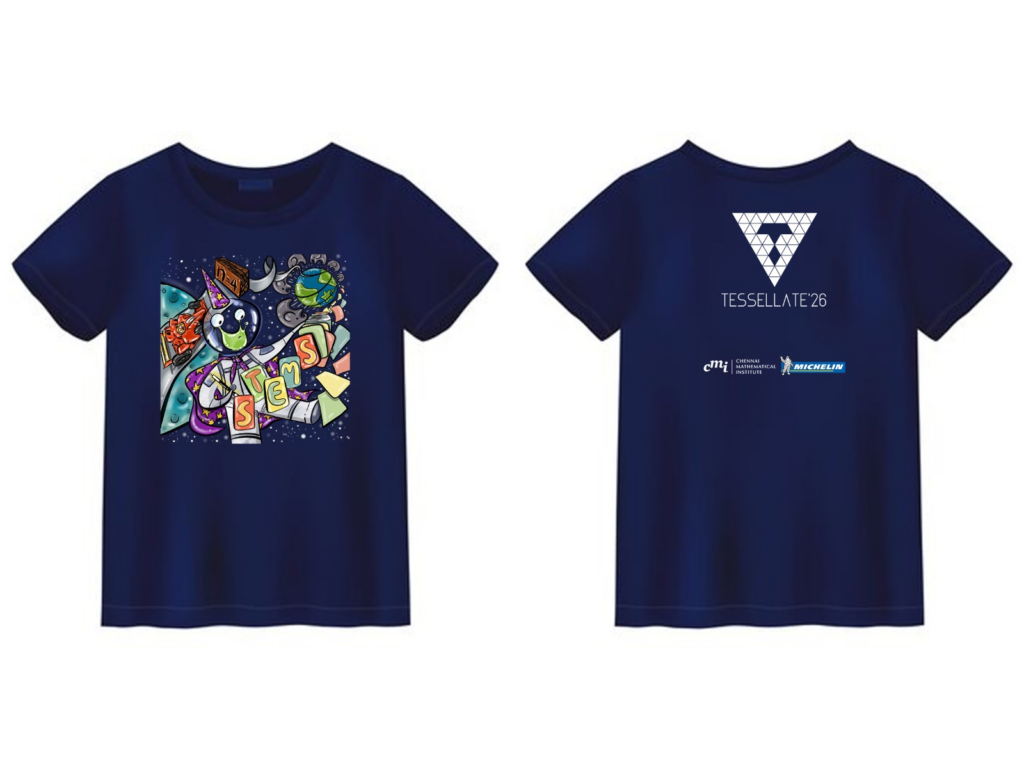
You should know about the many references in the STEMS T-Shirts that Agnes designed (or any of the other beautiful CMI T-Shirts).
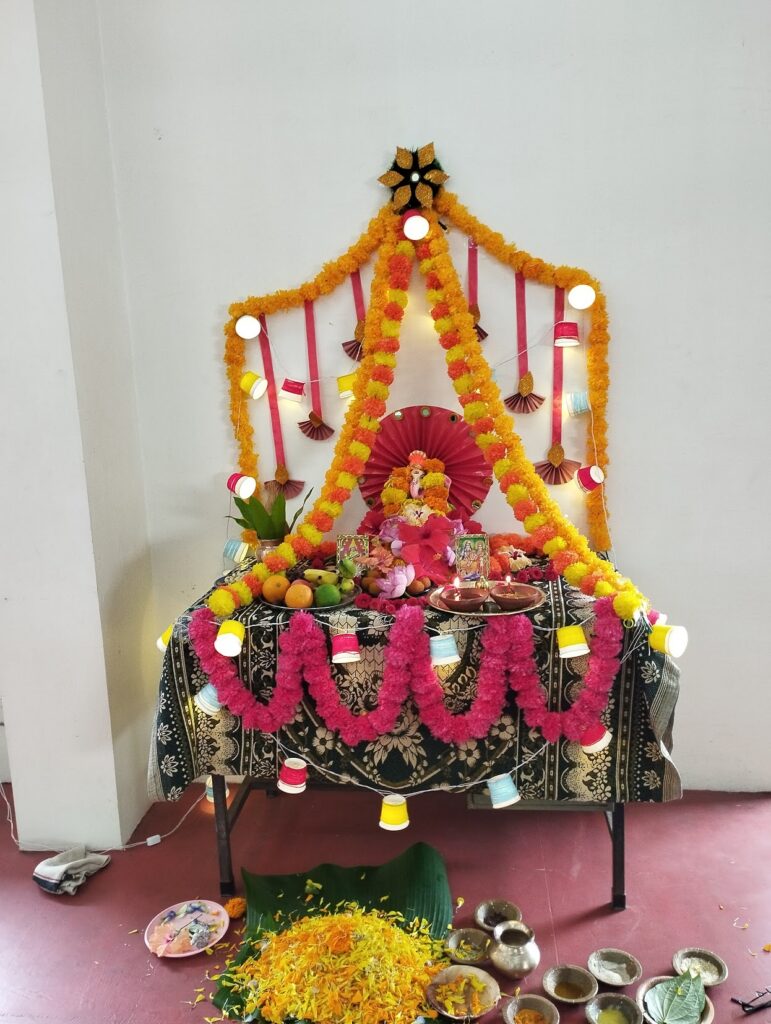
You should know about CMI’s Saraswati Pujo and Ganesh Chaturthi and all the little traditions we have.
And you should most definitely know about the cultural night and DJ nights.
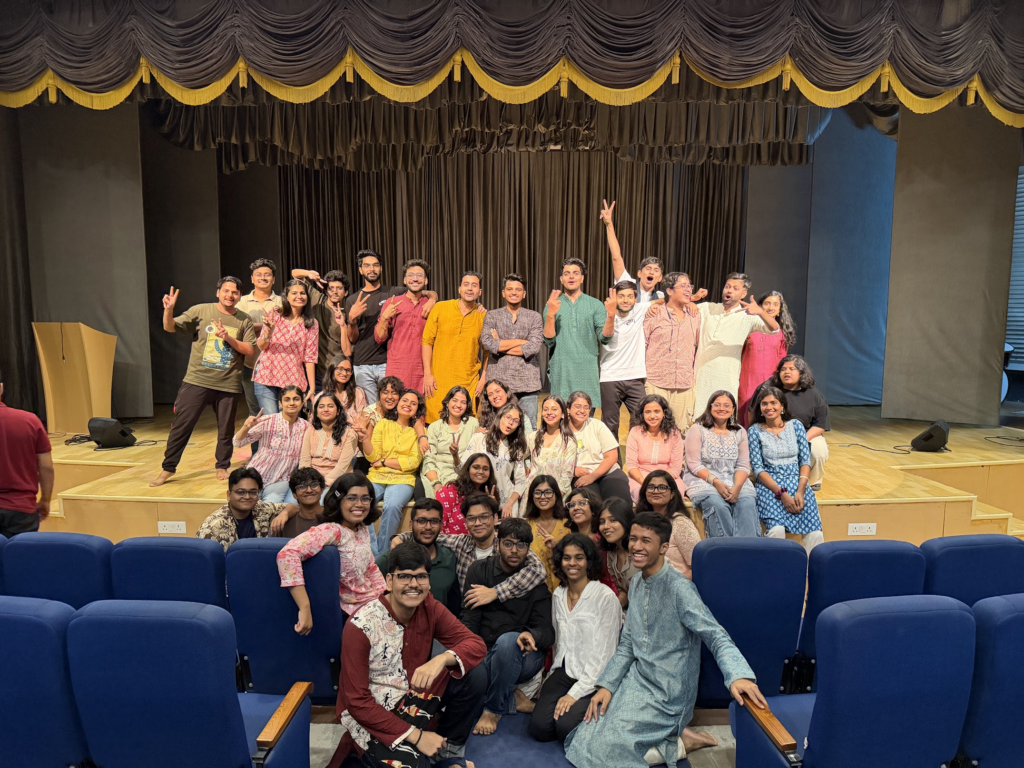
And all of this and so much more!
While CMI is far from perfect, as you’ll probably see in my coming posts. I absolutely have my gripes and complaints. But despite all that, in my opionon, CMI is an absolutely amazing place to be.
The official emails and brochures will tell you what CMI does, rigorous and deep math, computer science, physics and data science; but all of that is supported and sustained by a classy, curious, colourful, chaotic, charismatic and creative campus culture.
There is this quote by John Berger that I think about a lot
Every city has a sex and an age which have nothing to do with demography. Rome is feminine. So is Odessa. London is a teenager, an urchin, and in this hasn’t changed since the time of Dickens. Paris, I believe, is a man in his twenties in love with an older woman.
I would say every campus can also be anthropomorphized. While I don’t have a clear picture of who CMI is, even after spending two years here, I know the kind of conversations they would enjoy. They would stop to admire a clever proof, but they would stay back for a terrible pun. They would spend a night arguing about category theory and then another trying to bake themselves a cookie in the microwave. They would be the sort of person who takes ideas seriously but never themselves.
And that is the thing about places. Seldom are they built out of brick and steel and concrete. Places are built out of stories and they exist as long as the stories persist. That is what this blog hopes to preserve.
Years from now, when someone wonders what CMI was like in 2026, I hope they don’t just find assignments or grade sheets or placement reports or class notes. I hope they find these stories. I hope they laugh at the same jokes, marvel at the same creations and feel, if only for a moment, like they were here with us.
Because in the end, the oldest lesson about stories is still true. When all is said and done, it is the stories that remain.